Saturday, 21 January 2012

Pianist, composer and conductor


I suppose this combination was quite common in the eighteenth and nineteenth centuries. Mozart, Beethoven, Liszt, Brahms…

But more recently? Benjamin Britten comes to mind.

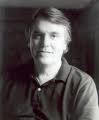
A major talent of this kind for the future is Alissa Firsova, who led a performance at the Royal Academy of Music in London on Monday. She opened by playing and directing Mozart’s great A major Piano Concerto K488 and followed this by conducting the first London performance of her own “Freedom” Clarinet Concerto. She ended with Mahler’s Fourth Symphony. Altogether an amazing achievement.

Currently a conducting student at the Academy, she had around her some dazzling young talent. Anna Hashimoto was the clarinettist and soprano Fiona Howell the soloist in the Mahler. The orchestra seemed to be a gathering together of Firsova’s student friends from the Academy. They were extraordinarily good.

I first met the then teenage Alissa several years ago, introduced by clarinettist Mark van de Wiel, who brought her clarinet quintet “LOSS”, played by the Philharmonia Soloists at our local village music festival in King’s Sutton. And she has been coming back ever since.

A name to watch.

Thursday, 19 January 2012

Socrates on success and failure


Not that I’m a great expert on the man, but I like the summary of Socrates on the subject of success and failure in Peter Stothard’s recent book On the Spartacus Road:

“Failure was so often better than success; there was so much more to be learnt from it.”

But only, of course, if one is looking. My experience of corporate behaviour is that people generally first look, then look away, then walk away.

Monday, 16 January 2012

Mastersingers in the concert hall


During the sometimes lengthy stretches of sung Wagnerian chat during last Wednesday’s Die Meistersinger von Nürnberg at Symphony Hall in Birmingham, I reflected on the fact that so many of my most intense experiences in opera have been not in opera houses, but in concert halls.

When I first started to go operas, productions seemed to fit seamlessly with the story, the characters and the music. Over the intervening half century, directors have come to rule the roost, more often than not imposing a “concept” that appears to have little or no connection with the composer’s and librettist’s intentions.

This gap is at its most cavernous when, say, the Orchestra of the Age of Enlightenment, playing in the pit at Glyndebourne, has meticulously researched the piece, endeavouring to present the work as closely as possible to what the composer might have experienced, while on-stage the singers are asked to be and do something that has all the hallmarks of having arrived from another era, another aesthetic, another planet.

Last Wednesday’s mastersingers, direct from the current Covent Garden production (not seen by me), wore lounge suits. There was no distracting scenery or “concept”. But they were totally inside their roles and performed the drama vividly.

It was an overwhelming experience of one of the great creative works, both words and music by Wagner himself.

Tuesday, 10 January 2012

KPIs OK?


I wonder whether the whole theory and practice of Management By Objectives has had the overall effect of improving performance or containing it? Or even, perish the thought, reducing it?

MBO was popularised by Peter Drucker in his The Practice of Management of 1954. Since that time, it has become ubiquitous, all employees having to have Key Performance Indicators by which they are assessed.

I’m sure that it appeals strongly to leaders who want to have CONTROL. The mantra “What gets measured gets done” is one of those articles of faith that is parroted to generation after generation of managers.

It seems to me that if people are engaged in, even inspired by, their work, then KPIs are often in reality a rather dreary invitation to deliver below their potential.

Sunday, 8 January 2012

Gaius Petronius or Charlton Ogburn Jr?


If we must make a choice, who carries the greater weight? The Roman author of Satyricon, Gaius Petronius (c. 27 to 66 AD), or a forgotten American obsessive believer that all of Shakespeare was written by the Earl of Oxford, Charlton Ogburn Jr?

All over the internet, there is a challenging and well-composed sentence about change management attributed to Petronius. Here it is:

We tend to meet any new situation by reorganizing; and a wonderful method it can be for creating the illusion of progress while producing confusion, inefficiency, and demoralization.

I think it’s brilliant. So good that it should perhaps be on the wall of every CEO in the world.

Trouble is, it was never written by the legendary Roman. In reality, it was part of an article in Harper’s Magazine written by Ogburn in 1957.

My own belief is that reorganizing is the last thing you do.

Friday, 6 January 2012

Keats and prototyping


Seems an unlikely connection, I admit.

This is what the great poet wrote in a letter to his brother and sister, George and Georgiana Keats, in 1819:

“Nothing ever becomes real till it is experienced.”

He continued: “Even a Proverb is no proverb to you till your Life has illustrated it...”

So, in innovation, it’s important to make whatever you are developing as tangible as possible, whether it’s a new product or service, or a new vision, mission, strategy, values statement, way of working – or a poem.

This is as much so that the inventors can play with it, discovering in practice what works well and what does not, as for putting it in front of consumers, customers, colleagues and other "stakeholders".

Wednesday, 4 January 2012

Mavericks and leadership


I was to discover rather early in life - in my teens - that having maverick tendencies is a serious barrier to being promoted to leadership positions.

I think the basic issue is that bosses can’t predict what you’ll do in any particular circumstances. Mavericks seem to them to carry more risk than reward.

And yet, when an organisation is in trouble and needs new directions, the creativity of mavericks is exactly the place that good solutions are likely to come from.

My own approach to this problem has often been to team myself with more sensible, structured, reliable partners. I think I did this for the first time at Saatchi and Saatchi. It worked well.

Are there other approaches that work?

Sunday, 1 January 2012

Leaving Saatchi


At thirty-one, I’d come to the conclusion that, to get experience as a CEO in the advertising business, I needed to leave Saatchi and Saatchi, the hottest agency on the planet at that time.

I had found another, smaller, agency that was looking for someone to succeed the dashing Rupert Chetwynd as MD. And they wanted me to do that.

Back at Saatchi, I was quite surprised, when I told Tim Bell of my plans, that they didn’t follow my reasoning at all. In fact they wanted me to stay. And so I found myself in the presence of the legendary Charles Saatchi (above, right).

What would it take to keep me at Saatchi’s? The offers came thick and fast. Salary increases, trains, boats, planes. Anything you like. Oh, and we’d like you to be managing director.

The problem with that offer was that the agency already had a whole raft of people called chairman, deputy chair, managing director, deputy MD and so on. I couldn’t see that becoming MD would have any reality to it. So I declined his kind offer as graciously as I could.

As I was leaving his office, Charles stopped me: “I’d just like to say one thing to you… It won’t be as easy out there.”

How right he was. Winning business at Saatchi’s was a walk in the park.

But how was I to know that?