Showing posts with label Alissa Firsova. Show all posts

Tuesday, 15 October 2013

Patiently waiting for the reviews


I went last Wednesday to the English Chamber Orchestra’s concert at Cadogan Hall in London. The orchestra was in tremendous form.

It was an extraordinary programme, featuring the world première of a new work by a Brilliant Young Composer ("Serenade for Strings"); a mature piano concerto by Mozart (No 23 in A, K488), directed and played by the same BYC; Tchaikovsky’s "Rococo Variations" for Cello and Orchestra, scintillatingly played by Michael Petrov and conducted by our BYC; and the fourth symphony of one of our best and best-established British composers a follower of Benjamin Britten David Matthews, and conducted by the BYC.

Hmmm… Britten. Didn’t he famously undertake all three roles - conducting, composing and playing concertos at concerts with the same ECO - half a century ago?

Surely our London music critics will all have been there last Wednesday? After all, it was a pretty rare occasion. What’s more, there was nothing else in the classical music line at the other leading concert venues in London that evening.

Really, I’ve been waiting, quite patiently, for the reviews. Thus far, there’s been not a word. And we’ll not need to hold our collective breaths any longer. Perhaps they all needed an evening off.

The Brilliant Young Composer, conductor and concerto pianist was, of course, the amazing talent that is Alissa Firsova.

Saturday, 22 December 2012

A Sort of Christmas Card: Winter Night

Winter Night
Boris Pasternak

It snowed and snowed, the whole world over,
Snow swept the world from end to end.
A candle burned on the table;
A candle burned.

As during summer midges swarm
To beat their wings against a flame
Outside the snowflakes swarmed
To beat against the window pane

The blizzard sculptured on the glass
Arrows and whorls.
A candle burned on the table;
A candle burned.

Upon the lighted ceiling
Distorted shadows fell
Of crossed arms, crossed legs-
Of crossed destiny.

Two little shoes fell to the floor
With a thud.
A candle on a nightlight shed wax tears
On a dress.

All things were lost within
The snowy murk - white, hoary.
A candle burned on the table;
A candle burned.

A corner gust fluttered the flame
And the white fever of temptation
Uplifted its angel wings that cast
A cross-like shadow

It snowed hard through the month
Of February, and from time to time
A candle burned on the table;
A candle burned.
Alissa Firsova set this and two other poems from Pasternak’s Dr Zhivago for voice and piano (for my 65th birthday). Zhivago Songs op 20.

A Happy Christmas to One and All.

Saturday, 21 January 2012

Pianist, composer and conductor


I suppose this combination was quite common in the eighteenth and nineteenth centuries. Mozart, Beethoven, Liszt, Brahms…

But more recently? Benjamin Britten comes to mind.

A major talent of this kind for the future is Alissa Firsova, who led a performance at the Royal Academy of Music in London on Monday. She opened by playing and directing Mozart’s great A major Piano Concerto K488 and followed this by conducting the first London performance of her own “Freedom” Clarinet Concerto. She ended with Mahler’s Fourth Symphony. Altogether an amazing achievement.

Currently a conducting student at the Academy, she had around her some dazzling young talent. Anna Hashimoto was the clarinettist and soprano Fiona Howell the soloist in the Mahler. The orchestra seemed to be a gathering together of Firsova’s student friends from the Academy. They were extraordinarily good.

I first met the then teenage Alissa several years ago, introduced by clarinettist Mark van de Wiel, who brought her clarinet quintet “LOSS”, played by the Philharmonia Soloists at our local village music festival in King’s Sutton. And she has been coming back ever since.

A name to watch.

Sunday, 19 June 2011

Rehearsal as a creative activity


I’ve always loved rehearsals. Probably somewhat more than performance or presentation. It’s a time when current ideas cross over with experimentation, so it can be a highly creative process.

In music, the first rehearsal that I remember was at school. It would have been around 1959 and I would have been fifteen.

Walking across the quad one afternoon, I could hear an orchestra playing in the hall, wandered in, and discovered Sir John Barbirolli rehearsing his wonderful Hallé Orchestra from Manchester. Rather shamefully, I don’t remember what the work was. What I do recall vividly was a dynamic sense of collective trial and error. And Barbirolli’s genial cajoling of the players to give of their best. His voice I can hear now – deep, authoritative but warm, the hint of a chuckle.

He struck me as an ideal leader figure. At one moment Barbirolli jumped down from the conductor’s rostrum and took the principal cellist’s instrument from him in order to demonstrate how he wanted a certain passage to go. Cheers and laughter from the players.

Ever since that time, I’ve attended rehearsals whenever I can. In fact for several years now I have an arrangement with the Orchestra of the Age of Enlightenment that, in return for bits of work that I do with them, from time to time I can sit in on their rehearsals. To watch a great conductor working with a brilliant group of musicians is a real thrill for me to this day.

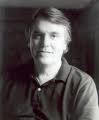
And as our little music festival kicked off this weekend in King’s Sutton, one of the greatest pleasures has been to see and hear Alissa Firsova (above) coaxing our restored 1872 Broadwood into giving voice again.

She played, exploring and polishing, for some four hours before finally giving her brilliant concert – Beethoven’s last sonata opus 111, Scriabin’s Poèmes, Bartok’s rarely performed Elegies and Schumann’s Faschingsschwank aus Wien (Carnival Jest from Vienna) opus 26.