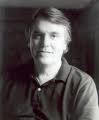
Showing posts with label Charles Saatchi. Show all posts

Wednesday, 26 November 2014

What Charles means is…


Stimulated by some photographs of the early days of Saatchi & Saatchi, the first meeting of the Garland-Compton board with them after the ‘merger’ in 1974 came back to me.

At the head of the table at 80 Charlotte Street was Charles Saatchi. On his right brother Maurice and on his left Tim Bell.

It fell to Charles to speak to us. He mumbled for five minutes or so. I don’t recall anything that he said – I’m not sure that I could decipher a word of it. Not his thing at all.

Silence fell over the room. What had we got into? This seemed like a visit from Cosa Nostra.

Then Tim spoke up.

‘What Charles means is that Saatchi’s is the fastest growing, most creative advertising agency in Britain. And our intention, together with you guys, is to become the biggest, most creative agency on the planet.’

Oh, well that’s all right. And that’s what happened.
 

Monday, 20 October 2014

Leaving Saatchi


The recent serialisation of Lord Tim Bell’s memoirs in the Daily Mail with its exposé of the ‘backstabbing, booze and screaming rows’*, put me in mind of the difficult time I had had in leaving the firm.

At thirty-one, I’d come to the conclusion that, to get experience as a CEO in the advertising business, I needed to leave Saatchi and Saatchi, the hottest agency on the planet at that time.

I had found another, smaller, agency that was looking for someone to succeed the dashing Rupert Chetwynd as MD. And they wanted me to do that.

Back at Saatchi, I was quite surprised, when I told Tim Bell of my plans, that he didn’t follow my reasoning at all. In fact they wanted me to stay. And so I found myself in the presence of the legendary Charles Saatchi.

What would it take to keep me at Saatchi’s? The offers came thick and fast. Salary increases, trains, boats, planes. Anything you like. Oh, and by the way we’d like you to be managing director.

The problem with that offer was that the agency already had a whole raft of people called chairmen, deputy chairmen, managing directors, deputy MDs and so on. I couldn’t see that becoming MD would have any reality to it. So I declined his kind offer as graciously as I could.

As I was leaving his office, Charles stopped me: “I’d just like to say one thing to you… It won’t be as easy out there.”

How right he was. In those days, winning business at Saatchi’s was a walk in the park.

But how was I to know that?

*http://www.dailymail.co.uk/news/article-2777199/The-Saatchis-Mad-Men-look-tame-Screaming-rows-Dirty-tricks-Backstabbing-booze-galore-Just-ordinary-day-surreal-world-ad-land-s-controversial-brothers-LORD-BELL.html
 

Monday, 30 January 2012

Why are so many leaders so bad at their jobs?


In spite of the massive amount of research into the subject and the plethora of training offerings available to new leaders, still they fail.

In the USA, some 40% of new leaders lose their jobs within 18 months. And there’s scant evidence that the 60% who manage to remain in post are much more competent or successful.

In 1969, Laurence Peter and Raymond Hull published a best-selling book, The Peter Principle: Why Things Always Go Wrong. Maybe it’s time for a new generation of managers to discover it. It’s still in print.

The best-known maxim enunciated by the authors was that “in a hierarchy every employee tends to rise to his level of incompetence”.

What appears to happen is that managers who do well in a particular role get promoted and fail miserably in the more senior job, which usually requires a quite different personality, approach and skill-set.

When I worked in the advertising business, the best copywriters and art directors regularly were moved up to be creative directors in charge of lots of very volatile underlings. They almost invariably lacked the people skills that mark out the finest creative directors.

The only person that I ever worked with who really understood this was Charles Saatchi. His best creatives stayed in the jobs where they excelled, applauded and paid tons of money, while others better suited provided the leadership and management.

More recent research* seems to confirm the Peter Principle. Rather extraordinarily, it appears that promoting people who are not good at their jobs has a greater success rate than promoting the ones who are.

But surely the key point is to understand what’s really needed in particular leadership roles ‒ and identify and put in place people who genuinely fit the bill.

*“The Peter Principle Revisited: A Computational Study,” Alessandro Pluchino, Andrea Rapisarda, and Cesare Garofalo, Physica A, vol. 389, no. 3, February 2010, pp. 467-72.

Sunday, 1 January 2012

Leaving Saatchi


At thirty-one, I’d come to the conclusion that, to get experience as a CEO in the advertising business, I needed to leave Saatchi and Saatchi, the hottest agency on the planet at that time.

I had found another, smaller, agency that was looking for someone to succeed the dashing Rupert Chetwynd as MD. And they wanted me to do that.

Back at Saatchi, I was quite surprised, when I told Tim Bell of my plans, that they didn’t follow my reasoning at all. In fact they wanted me to stay. And so I found myself in the presence of the legendary Charles Saatchi (above, right).

What would it take to keep me at Saatchi’s? The offers came thick and fast. Salary increases, trains, boats, planes. Anything you like. Oh, and we’d like you to be managing director.

The problem with that offer was that the agency already had a whole raft of people called chairman, deputy chair, managing director, deputy MD and so on. I couldn’t see that becoming MD would have any reality to it. So I declined his kind offer as graciously as I could.

As I was leaving his office, Charles stopped me: “I’d just like to say one thing to you… It won’t be as easy out there.”

How right he was. Winning business at Saatchi’s was a walk in the park.

But how was I to know that?

Thursday, 4 November 2010

Blurting the truth


Reports in the Sunday Times of Charles Saatchi and Nigella Lawson’s new Chelsea home brings to mind the disastrous interview I did with another advertising legend, Frank Lowe, also in Chelsea.

He was looking for someone to head up his then burgeoning international agency business and I’d been recommended.

I arrived at his elegant terraced house and was shown into the “front room”. I marvelled at the extraordinary glass dome three stories above and the enormous fireplace. It reminded me of something, but what was it? Ah, yes - Orson Welles and “Citizen Kane”.

After a wait of thirty minutes or so, Frank finally appeared. “What do you think of the house?” he enquired.

“Seems to have been designed by a megalomaniac,” I blurted.

“Yes,” he said. “I designed it.”

I wasn’t offered the job.

It was one of Malcolm Gladwell’s “Blink” moments for both of us: he knew instantly that I was not right for him. But, before he showed, I already knew that it was not for me.

Have you had instantaneous “Blink” moments - ones where you have blurted the truth?

Wednesday, 23 December 2009

Étonne-moi, Jean!


Commissioned to write a new ballet, the French writer, Jean Cocteau, asked Serge Diaghilev, the great Russian impresario, what was the brief? “Étonne-moi, Jean!” was Diaghilev’s instant response. “Astonish me!”

The eventual result was Parade: music by Satie, choreography by Massine, designs by Picasso, scenario by Cocteau. (What a team.) The first cubist ballet, it was also the birth of surrealism. Parade was premièred by Diaghilev’s Ballets Russes in Paris in 1917, causing general shock and amazement.

I rather doubt that Charles Saatchi knew this line when he was briefing creatives in his ad agency – he wrote recently that he doesn’t care for ballet - but that was exactly the core message that constantly permeated his business in its palmiest days.

So what’s the point? Whatever business you’re in – whether it be ballet or advertising, or banking or beauty, if you want real, breakthrough creativity, find and hire some VERY talented and creative people (amongst the conscientious and reliable ones) – and challenge them to ÉTONNE you. And listen attentively and open-mindedly when they do just that.