Showing posts with label Covent Garden. Show all posts

Thursday, 17 April 2014

Ten Aussie tenors


While Australia has produced a regal procession of sopranos over the course of a century and more, the tenors are not so well-remembered, none being in the Caruso/Pavarotti class, but here are ten that we’re including in ‘From Melba to Sutherland: Australian Singers on Record’:

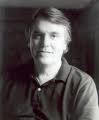
Browning Mummery (above)
Alfred O’Shea
Lionello Cecil (Lionel Cecil Sherwood)
Max Worthley
Harold Blair
Ronald Dowd
Kenneth Neate
John Lanigan
Donald Smith
Albert Lance

As a young man, the earliest of them, Browning Mummery, sang with Nellie Melba at her famous 'Farewell' to Covent Garden in 1926, and the latest, the wonderful Albert Lance, sang with Maria Callas at her equally famous debut at the Opéra in Paris in 1958.

Here’s Albert Lance in Tosca: https://www.youtube.com/watch?v=1KoGaCvdYVs

Monday, 4 June 2012

The rise and rise of La bohème


I’ve been aware for many years that the catalytic role of Nellie Melba in turning Puccini’s opera La bohème from something of a flop into one of the world’s favourite operas has not been understood. One could read any of the multiplicity of biographies of the composer or the diva without grasping this.

So I was thrilled to be asked to write an essay covering the way she went about it for this year’s programme for Glyndebourne. And delighted to be invited with my wife and ten year old daughter (her first opera) to the dress rehearsal of David McVicar’s superb production on Saturday.

Briefly, this is what happened.

Although La bohème had its première in 1896 in Turin with Toscanini conducting, it was something of a flop. Several other productions followed, including one in England given by the Carl Rosa company.

Melba somehow had decided that Puccini was “the coming man” and arranged to go to Lucca, where the composer lived, to study the role of Mimì with him. There are various versions as to how long she was there, but she worked with him every day on the rôle.

She was already the most famous opera singer in the world and could so easily have taken the opera into any of the leading houses in the world. But she did not do this. Instead she formed a company of her own in the USA and toured La bohème from coast to coast in 1898/99, starting at Philadelphia in the east and finishing in San Francisco.

Only then did she feel ready to take it to Covent Garden, where it was “the hit of the season”, according to Punch.

Then she went on tour with it a second time, again from coast to coast in America, but this time with the Metropolitan Opera, starting in Los Angeles, and arriving triumphantly at the company’s home base in New York on Boxing Day of 1900.

The opera never looked back.

The question is: why is this story not better known, even to opera buffs?

Here she is, singing the duet from Act 1 with Enrico Caruso, recorded in 1907:

http://www.youtube.com/watch?v=COXFBMoTgSw

Monday, 16 January 2012

Mastersingers in the concert hall


During the sometimes lengthy stretches of sung Wagnerian chat during last Wednesday’s Die Meistersinger von Nürnberg at Symphony Hall in Birmingham, I reflected on the fact that so many of my most intense experiences in opera have been not in opera houses, but in concert halls.

When I first started to go operas, productions seemed to fit seamlessly with the story, the characters and the music. Over the intervening half century, directors have come to rule the roost, more often than not imposing a “concept” that appears to have little or no connection with the composer’s and librettist’s intentions.

This gap is at its most cavernous when, say, the Orchestra of the Age of Enlightenment, playing in the pit at Glyndebourne, has meticulously researched the piece, endeavouring to present the work as closely as possible to what the composer might have experienced, while on-stage the singers are asked to be and do something that has all the hallmarks of having arrived from another era, another aesthetic, another planet.

Last Wednesday’s mastersingers, direct from the current Covent Garden production (not seen by me), wore lounge suits. There was no distracting scenery or “concept”. But they were totally inside their roles and performed the drama vividly.

It was an overwhelming experience of one of the great creative works, both words and music by Wagner himself.

Sunday, 2 October 2011

Giving thanks for the life and work of Lord Harewood


On Friday I went to the Thanksgiving Service for the life of Lord Harewood at All Saints Church, Harewood. Several of our greatest singers performed for us, including Sarah Connolly, Mark Padmore and Sir John Tomlinson. Moving tributes were paid to him by the conductor, Sir Mark Elder, and the footballer, Jack Charlton.

What an extraordinary achievement his working career was. Born into a family not noted for its devotion to the arts, he was first cousin to the Queen and a grandson of King George V and Queen Mary. As a young man he fought in the Second World War and was a prisoner-of-war at Colditz in Germany.

After the war he joined the staff of the Royal Opera House, Covent Garden, going on to direct annual music festivals in Edinburgh, Leeds, Adelaide and Buxton. Later he joined the English National Opera first as managing director and then as chairman.

His time leading the ENO was the triumphant peak of his career, and I was lucky enough to be there for many of the finest productions of that era. He brought together a brilliant and innovative artistic team, with Charles Mackerras and then Mark Elder as musical directors, and a superb company of singers.

Was he the first member of the British royal family to have a full working life, aside, that is, from joining the military or running the family business?

Thursday, 5 May 2011

Melba at 150


In two weeks time from today (19 May) it will be the 150th birthday of Helen Porter Mitchell. She was born in Melbourne, Australia, and was destined to become the leading opera singer in the world in the Golden Age - and a household name - Dame Nellie Melba.

There were a number of special qualities that separated Nellie from her contemporaries:

With the help of three teachers – Ellen Christian, Pietro Cecchi and Mathilde Marchesi – and the requisite “10,000 hours”, she developed a technique that enabled her to perform at the highest level over four full decades. “Salvatore, viens,” Marchesi called to her husband on first hearing the girl, “j’ai trouvé une étoile.”

In an age when married women were expected to give up work, she decided that instead the husband should go.

She had a wonderful sense of pitch and always sang in tune.

She learned many of her greatest roles with the composers themselves – Verdi, Massenet, Gounod, Puccini among them. And she promoted avant-garde songs by Debussy, Duparc, Chausson and others.

She took responsibility at all stages for managing her own career, bringing in a series of helpers, but never delegating the authority.

She was a brilliant entrepreneur, always ready to do what was necessary to maintain her profile and fill houses. “There are plenty of duchesses, but only one Melba,” she said.

“If you wish to understand me, you must understand first and foremost that I am an Australian,” she wrote. This attitude enabled her to break through the rigid barriers of British society of her day, speaking plainly with everyone at every level.

She was a catalyst in building the newly-emerging recording industry, negotiating a pioneering royalty arrangement.

When she died in Sydney in 1931, her coffin was carried by special train to Melbourne, stopping at towns and villages on the way so that crowds of people could pay their respects. Her grave at Lilydale carries a brief phrase from her most famous role, Mimì in La bohème: “Addio, senza rancor.” Farewell, no hard feelings.

Here she is at 65, singing that very aria , recorded live at her Farewell from Covent Garden in 1926: http://www.youtube.com/watch?v=MEhr_3E3XEA

Wednesday, 16 February 2011

Giving thanks for Dame Joan


Went yesterday to the Thankgiving Service at Westminster Abbey for the great Australian soprano, Dame Joan Sutherland. Packed house. Wonderful occasion.

She had a career spanning half a century, singing in all the great opera houses of the world, but her artistic home was always the Royal Opera House, Covent Garden. I was lucky enough to see and hear her often, both there and later at Sydney Opera House. Unassuming and full of fun, she was the most undivaish of divas.

After hearing the Abbey choir sing Byrd and we had mumbled a hymn, suddenly, there she was - recorded early in her career, singing Handel’s “Let the Bright Seraphim”. Dazzling technique. Incredible flexibility. Gorgeous creamy voice. Fabulous breath control.

Coached throughout her career by her husband, the conductor Richard Bonynge, she had brought a new dimension to the singing of 18th and early 19th century music.

It occurred to me, listening to that stream of notes, that she and Bonynge had not only re-introduced the opera world to a hatful of forgotten masterpieces, particularly the so-called bel canto operas of Donizetti and Bellini, but also that together they had re-created the substantially forgotten art of vocal ornamentation – the kind of thing that pop stars like Mariah Carey and Christina Aguilera aim to do, by comparison rather crudely, nowadays.

Re-discovery can be just as powerful as discovery in innovation.

Friday, 28 January 2011

Someone I never met


Although it’s in an extraordinarily beautiful part of England, Uppingham School in the late 1950s and early 1960s was mostly a stultifying experience for me.

With the aim (for him) of following my father as a General Practitioner, I was coerced into studying sciences at school, whereas all my own interests were in the arts, history and languages. In many ways I’m grateful now that I have some understanding of science and scientific method. For example, it has enabled me to spend a working life up to my armpits in the analysis of data. And to facilitate innovation meetings on leading edge subjects such as nanotechnology.

I’ve also been able to pursue my own preferred path consistently since leaving school at eighteen.

One thing that was an enormous help to me was to identify, while I was at Uppingham, a former pupil who went on to forge a brilliant career in the arts – in his case as a film director and opera producer – John Schlesinger. While I was still at school, he directed a wonderfully vital documentary about Waterloo Station, later going on to make many of the best movies on his generation – A Kind of Loving, Billy Liar, Darling, Far from the Madding Crowd, Midnight Cowboy, Sunday Bloody Sunday, Marathon Man and many more.

His example was with me both at school and thereafter. I followed everything he did. And on Wednesday, on the hundredth anniversary of the première of Richard Strauss’s Der Rosenkavalier, I took time out to watch (on DVD) his timeless production of the opera at the Royal Opera House, Covent Garden. This is the final trio with Kiri Te Kanawa, Anne Howells and Barbara Bonney: http://www.youtube.com/watch?v=3WIscFQy1CQ&feature=related

He’s gone now, but I owe him a great deal.

Do you have someone you never met who unknowingly helped to shape your creative life?