Showing posts with label Glyndebourne. Show all posts

Tuesday, 8 July 2014

Bravo Figaro ‒ bravo, bravissimo


To Longborough Festival Opera again, this time for Rossini’s The Barber of Seville, together with daughters Kate and Dora, granddaughter Isobel, and wife Sophie Wilson.
 
Longborough is a country house opera, built into a large converted barn- a less polished version of the Glyndebourne experience – and none the worse for that. They have created an outstanding reputation in a few years for musical excellence, not least managing to find and employ fine young singers.
 
Perhaps the standout among these is the soprano Rachel Nicholls, who had a good reputation as a singer of Baroque music, but who has been transformed by Longborough’s Musical Director, Anthony Negus, into one of the leading Wagnerian sopranos of our time. She was an outstanding Brünnhilde in the Ring Cycle there last year, and this season sang Wagner’s Wesendonck Lieder superbly, an enticing sample of what we may expect next year, when she will sing Isolde for the first time.
 
The Barber turned out to be a good choice for eleven year old Isobel’s first visit to an opera house (last year she sang in Britten’s The Little Sweep). And it was second time for twelve year old Dora. In a lively, witty, well-acted and sung performance, both girls picked the Figaro of Grant Doyle as their favourite.
 
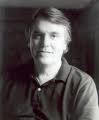
My own pick was the brilliant coloratura and subtle acting of mezzo-soprano Helen Sherman (above) as Rosina. Both Doyle and Sherman are Aussies, continuing the great tradition of outstanding singers from that country from Nellie Melba to Joan Sutherland and onward.

Monday, 30 June 2014

A wild Mozartean ride at Glyndebourne


The truth is that I’d had mixed feelings about going to Mozart’s La finta giardiniera at Glyndebourne. Early Mozart operas can be a somewhat tedious procession of recitativo alternating with aria, the latter usually of the ‘stand and deliver’ variety.

What’s more, it was to be produced by a young director with virtually no track record either on the opera stage or in the theatre, Frederic Wake-Walker. Would it turn out to be another tiresome travesty, the goings-on on stage apparently unrelated to the work and its universe?

Of course, in the event it was one of the most exciting productions seen at the house in some 45 years of Glyndebourne visits. The Orchestra of the Age of Enlightenment, conducted by Glyndebourne’s new musical director Robin Ticciati, were, as expected, on top form, producing scintillating sounds. And the seven who took the principal roles (Christiane Karg, Rachel Frenkel, Joélle Harvey, Nicole Heaston, Joel Prieto, Gyula Orendt and Wolfgang Ablinger-Sperrhacke) were all outstanding, both as actors and singers. So far, so good.

But it was the production itself that was an extraordinary revelation. First, the director Wake-Walker and his designer (Antony McDonald) had actually located the action (at least initially) in the Rococo period. Quite a shock in itself. And the performers had clearly studied art of that time, at least sufficiently to reproduce credible Rococo gesture (see above).

As time went by – I seemed to be holding my breath for long periods – the production took on a wild, improvisatory life, one that clearly took a bewitched audience on a theatrical ride that all seemed to spring from character and situation – and from the music.

Who knew that nineteen year-old Mozart could be so breath-taking?

Sunday, 25 August 2013

Lifelong learning at Glyndebourne


With the final performance (today) of the 2013 festival, Vladimir Jurowski has now completed his last season as musical director at Glyndebourne, the wonderful country house opera in the Sussex downs.  

His thirteen seasons there started when he was in his early 30s, and he has personally conducted eighteen different operas over that period, introducing two major Wagner works to their repertoire (Tristan und Isolde and Die Meistersinger von Nürnberg), two of the Verdi/Shakespeare operas (Macbeth and Falstaff), operetta (Die Fledermaus), two Russians (Prokofiev’s Betrothal in the Monastery and Tchaikovsky’s Eugene Onegin), and a world première in the form of Eötvös’s Love and Other Demons.

I was lucky enough to be introduced to him seven or eight years ago and, discovering a mutual interest in original performing styles, I offered to send him from time to time some of the earliest recordings of great singers performing arias from operas which he was to conduct. He took me up on this, and so for several seasons I would send him a bespoke CD – Wagner, Verdi and Tchaikovsky are the ones I most recall. And, perhaps from other sources, he was also listening to the earliest recordings of orchestral works.

I was thrilled. My previous experience of conductors (and singers) is that they rely principally on the score, on their own judgement, and on their training at conservatoire as to how music should be performed, not bothering with ancient, sometimes murky recordings.

Jurowski, however, is quite different. He is a true lifelong learner, endlessly trying to understand how it was done then in order to help him appreciate how to do it now. In an interview in 2008 he talked about how he had known Tchaikovsky’s music intimately since he was a small child, watching his father rehearse and conduct at the Bolshoi in Moscow.

And yet, he wrote: “In the last year, I started listening with different ears and much more attention to detail to the very old recordings of Tchaikovsky’s music.” He concluded that “… they sounded less flashy and less showy, but there was something else in the performance of the music. There was this fragility which is missing in almost all of the performances today.” 

In the meantime, the massive growth of YouTube, and the fact that so many of the finest early performers who recorded are now much more easily accessed, means that this experience is available to all musicians and singers. I wonder how many of them take up that opportunity in an open-minded way?

So, listen to Lilli Lehmann (born in 1848, she was in the first performances of Wagner’s Ring cycle at Bayreuth in 1876) singing the Liebestod from Tristan und Isolde in 1907 from the only surviving test pressing.

Monday, 20 May 2013

Sunny sounds at Glyndebourne


Glorious sunny day at Glyndebourne, where we were lucky enough to take in the dress rehearsal of Verdi’s Falstaff.

He wrote this brilliant, taut, energetic, funny piece at the age of eighty, his last opera. Hope for us all. (By the way, the opera is a serious improvement on The Merry Wives of Windsor.)

The singing was first-rate, but it was the orchestral playing that was so intriguing. For the first time, Falstaff was given with an orchestra dedicated to the kind of instruments and performing practices that the composer would have expected. This seems to have been at the initiative of the conductor, a famous Verdian, Sir Mark Elder, the band in question being the Orchestra of the Age of Enlightenment.

While they started life focused on baroque and classical music, in recent years the OAE has been exploring the Romantic repertoire, right up to the early twentieth century, with revelatory consequences. 

In this case, using gut strings instead of metal, and with narrow-bore trombones and valveless horns, the orchestra produced sounds of startling clarity. But for me the major change was the shift in balance of sound between orchestra and stage. Often the singers have to strain to be heard over a modern symphony orchestra playing fortissimo, but here they could really shine through.

A memorable evening.

Monday, 4 June 2012

The rise and rise of La bohème


I’ve been aware for many years that the catalytic role of Nellie Melba in turning Puccini’s opera La bohème from something of a flop into one of the world’s favourite operas has not been understood. One could read any of the multiplicity of biographies of the composer or the diva without grasping this.

So I was thrilled to be asked to write an essay covering the way she went about it for this year’s programme for Glyndebourne. And delighted to be invited with my wife and ten year old daughter (her first opera) to the dress rehearsal of David McVicar’s superb production on Saturday.

Briefly, this is what happened.

Although La bohème had its première in 1896 in Turin with Toscanini conducting, it was something of a flop. Several other productions followed, including one in England given by the Carl Rosa company.

Melba somehow had decided that Puccini was “the coming man” and arranged to go to Lucca, where the composer lived, to study the role of Mimì with him. There are various versions as to how long she was there, but she worked with him every day on the rôle.

She was already the most famous opera singer in the world and could so easily have taken the opera into any of the leading houses in the world. But she did not do this. Instead she formed a company of her own in the USA and toured La bohème from coast to coast in 1898/99, starting at Philadelphia in the east and finishing in San Francisco.

Only then did she feel ready to take it to Covent Garden, where it was “the hit of the season”, according to Punch.

Then she went on tour with it a second time, again from coast to coast in America, but this time with the Metropolitan Opera, starting in Los Angeles, and arriving triumphantly at the company’s home base in New York on Boxing Day of 1900.

The opera never looked back.

The question is: why is this story not better known, even to opera buffs?

Here she is, singing the duet from Act 1 with Enrico Caruso, recorded in 1907:

http://www.youtube.com/watch?v=COXFBMoTgSw

Monday, 16 January 2012

Mastersingers in the concert hall


During the sometimes lengthy stretches of sung Wagnerian chat during last Wednesday’s Die Meistersinger von Nürnberg at Symphony Hall in Birmingham, I reflected on the fact that so many of my most intense experiences in opera have been not in opera houses, but in concert halls.

When I first started to go operas, productions seemed to fit seamlessly with the story, the characters and the music. Over the intervening half century, directors have come to rule the roost, more often than not imposing a “concept” that appears to have little or no connection with the composer’s and librettist’s intentions.

This gap is at its most cavernous when, say, the Orchestra of the Age of Enlightenment, playing in the pit at Glyndebourne, has meticulously researched the piece, endeavouring to present the work as closely as possible to what the composer might have experienced, while on-stage the singers are asked to be and do something that has all the hallmarks of having arrived from another era, another aesthetic, another planet.

Last Wednesday’s mastersingers, direct from the current Covent Garden production (not seen by me), wore lounge suits. There was no distracting scenery or “concept”. But they were totally inside their roles and performed the drama vividly.

It was an overwhelming experience of one of the great creative works, both words and music by Wagner himself.