Showing posts with label Sydney. Show all posts

Saturday, 23 August 2014

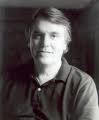
Vincent Nolan RIP


I first met Vincent Nolan some forty years ago. He came to teach Synectics to a group of us at Garland-Compton (shortly before it morphed into Saatchi and Saatchi). I was in my late twenties and had risen quickly in the advertising business, but learning from Vincent undoubtedly transformed my life.

It dawned on me that one of my main skills up to that point was in identifying weaknesses in other people’s thinking and wielding the scalpel, and that this approach, while it had helped me to be successful, was of very limited value in promoting real creativity and innovation (the lifeblood of marketing communications). Vincent taught us that a better approach was first to articulate the value in emerging ideas, then going on to identify the key issues and problem-solve them.

This may seem simple, even obvious, but it required some complete personal rewiring in myself, changes that have lived at the heart of my life and work ever since.

Following that early encounter, I brought Vincent into each successive new role I found myself in – training my new teams in the whole Synectics bag of tricks. Perhaps most powerfully this was achieved at Lintas in Sydney, where, in a succession of visits from him, most colleagues in the agency were given the treatment. This was a major factor in enabling us to work together more effectively and creatively – and as a consequence we were able to rise from eighth in the local league table to second in just five years, quadrupling profits in the process.

Eventually I joined Synectics myself, as Vincent gradually wound down his life's work, concentrating more on his cello and his golf.  

At 85, Vincent Nolan died last Sunday, 17 August.

Saturday, 5 July 2014

The legendary Prince Ranjitsinhji in the first-ever film of cricket


My father used to talk in hushed tones of the graceful elegance of the great batsman Prince Ranjitsinhji. There was no Indian cricket team in Ranji’s day, so he played for England. In truth my father never saw him play, except maybe briefly on a news report at the cinema in the 1920s.

But Ranji had been filmed earlier, much earlier in the nets in Sydney during an Ashes test match in December 1897, a match in which he scored a brilliant 175 runs in the first innings, the highest score yet made by an England batsman in a test match.

There is some dispute about who made that brief pioneering film. I had always assumed that it was the Australian photographer, H Walter Barnett, briefly returned to Sydney after setting up his studio in London. But, as Sally Jackson in Canberra shows in a current essay*, Barnett did not in reality make that trip home, so the film must have been shot by someone else associated with his business, Falk Studios, there perhaps Frenchman Georges Boivin, Sally suggests.

I was lucky enough to see the film at a presentation at the British Film Institute some years ago, and to a cricket-lover it is fascinating. Without the protection of either pads or gloves, Ranji plays with the softest of soft hands, turning the ball deftly to fine leg. Of course, he was the perfector of that stroke, the leg glance, now a standard part of every good batsman’s technique. 

Surely it’s time for this historic footage to emerge from the darkness of the BFI’s archives into the public domain?


Monday, 5 May 2014

Aiming straight in Sydney


I ran a strategy workshop in Sydney for the Domestos brand. What might be its future role in Australian bathrooms?

Included was a mix of Unilever managers from various functions and an equal number of Aussie 'consumers', all women.

I can’t quite remember how it started, but the women got into a group rant about the inadequacies, the incompetence, the total hopelessness of men. This went on for what seemed an age until they paused, quiet, perhaps to draw breath.

Then a tall blonde announced with an air of game, set and match : “They can’t even bloody AIM STRAIGHT.”

Sunday, 2 February 2014

Birth of the FIIBI Club


On Facebook Joy Clark reports a reunion of Lintas Sydney Ladies at the Yum Yum Eatery in beautiful Killcare and it reminded me of the first stirrings of a Ladies’ Dining Club at the agency in the mid-1980s.

The problem getting started was not in signing up members, but rather in deciding where to go. One restaurant would be proposed and rejected. Then another. And another.

Until, one day, I think it was the somewhat proper Susannah Throsby (as she was) who announced: “Fuck it, I’ll book it.”

And so was born the FIIBI Club.

Thursday, 28 November 2013

Big Steel Bird flies in


I was asked recently when was the last time I played in public. Well, I think it was in 1984 or 1985.

An office band at Lintas Sydney was formed for a party and I was asked to sit in on bass guitar. Since I was the Chairman/CEO at the time and my past as a rock musician was not generally known, I asked that my participation was kept secret until the performance. In the event, it was not that I played well that surprised (I didn’t), but that I played at all.

Sad to say, I don’t remember who all the band-members were. I think creative director Al Crew was there. And Tracey Harbutt (now Tilda Bostwick) sang with great élan. But at the heart of it all was a bright young copywriter, Dugald McDonald.

Now, nearly three decades later, Doogie’s new CD has lobbed in from Africa: Big Steel Bird. It’s a total delight. He wrote all the songs, plays guitar and sings.

Here’s a nice commercial he made in 2012: http://www.youtube.com/watch?v=rpYBhUYJcqY

But here’s where you can find that Big Steel Bird: http://www.cdbaby.com/cd/dugaldmcdonald

Wednesday, 20 November 2013

Remembering Bryce Courtenay

Bryce was a rock for me before he became Australia’s best-selling author of all time. He as partner and creative director at his own agency in Sydney, me as chairman of Lintas there. We lunched together regularly. While in public he could roar, in private he was a source of great kindness, calm and wisdom.

When I was coming back to live and work in London, he gently mocked my attempts to express my love of Australia at my leaving party. I only saw him once after that. And by then he had become the famous writer of his first best-seller, The Power of One. He told me that he had sold the film rights in New York for “a million dollars”.

I asked him how he had got started as a real writer (as opposed to a copywriter), and he told me that he had been out with some mates one evening and mentioned the novel he’d been thinking about. “Bryce, I’m sick to death of hearing about this book,” responded one of his friends. “Just shut up and write it.”

“So what did you do?” I asked him.

“I went home, got out a sheet of paper, and started.”

It’s one of the most simple and vibrant openings in literature: “This is what happened... ”

Bryce Courtenay died on 22nd November 2012.

Sunday, 21 October 2012

Customer service at its best

Overnight from Singapore, I arrived in Sydney on an early morning flight.

Checking in at the Regent – now the Four Seasons I was asked “When is your first meeting, Mr Neill?”

“At nine-thirty,” I responded.

“Well, would you like a suit pressed?”

Now that’s what I call customer service.

Monday, 15 October 2012

Welcome to our home

As regular readers will know, I am a devoted follower of Professor Hofstede and his researches into cultural difference as it impacts organisations.

One thing is clear. It is a more difficult and complex matter to provide effective leadership in situations where there is low “power distance”.

Where power distance is high, for example in India or Latin America, people by and large will do what they are told to do, and what’s more expect it to be so.

But where power distance is low, for example in Australia, how can a leader expect to get compliance?

When I lived in Sydney in the 1980s, the finest hotel in the city was the Regent. Not only did it have a magnificent position with sweeping views over the harbour. It also had immaculate service.

But Australia is a society that has joyfully escaped from the servant culture. “How do you get your people to be so terrific in dealing with guests?” I asked the General Manager, an American.

“It was a real problem to me for quite a while,” he responded. “But then I got it. It dawned on me that Aussies are both intensely house-proud and extraordinarily hospitable. So we re-positioned the hotel internally as ‘our home’ and the customers as our own guests.”

Simple and brilliant.

Tuesday, 6 March 2012

On being interviewed in Australia


I was sent to Sydney in 1980 to see the Unilever Ice Cream client and review the work of our agency. I was responsible at that time for Lintas’s Unilever ice cream portfolio around the world.

I was there for about two and a half days. All went well. The people in the agency seemed terrific. And, of course, I loved Sydney and thought how great it would be to live there.

On the final afternoon, the bar opened around five, and a party of us moved on to dinner. Then to bar one, bar two and so on.

At something like five in the morning, all that was left of us was the brilliant and witty Jeff Seldon, and myself.

When I got home, the boss of the network said, “Well they liked you. Do you want the job?”

And that’s how I became chairman of Lintas Australia. I had the time of my life there.

Monday, 25 July 2011

Helena Rubinstein and the Sheep of Australia

I have recently been discussing with Facebook friends the apparent shortage of women innovators. Among the many contributory factors, one is that so many of the trained engineers and scientists in the western world have always been men.

But innovation comes in many forms and one woman that I find fascinating is the legendary Helena Rubinstein.

Born in 1870 in Krakow, Poland, she moved to Australia in 1902. She had very little English and no money. But she did have family there – her uncle was a shopkeeper in Coleraine, a small town some 350 kilometres west of Melbourne. This was Big Sheep country and there was an unending supply of lanolin, the grease secreted by the sheep to keep their woolly coats in good condition. Rubinstein used the lanolin as the basis of her own skin creams, disguising its unpleasant odour with lavender and other fragrances.

Later she moved to set up business in Collins Street, still the smartest place for shopping in Melbourne, then Sydney, then London, Paris and New York. She was a brilliant marketer of her products, creating the whole concept of “problem skin” and discovering that, if sales were flagging, raising prices was a good way to get things moving again. Her pushy mantra was: “There are no ugly women, only lazy ones.”

She was to become the first self-made female millionaire.

(I see that there’s a new book out by Ruth Brandon about Rubinstein and the founder of L’Oréal, Eugène Schueller, which I’ve not yet seen.)

Tuesday, 5 July 2011

Sixty-seven better than one?


While I was living and working in Sydney, I took the worldwide boss of Lintas to visit our office in Auckland. I don’t think such a thing had ever happened before.

He was impressed with the people and their work. Flying back together to Australia, he was in reflective mood.

“You know, Rog,” he said, “these people in Auckland. They handle the same number of clients that we handle in New York. And same number of brands. And they do all the things we do in New York. They plan strategy. They plan and buy media. They write and produce ads in all media. They create sales promotions and help clients to innovate. And I reckon their work overall is just as good as ours in New York.”

“Just one thing,” he went on. “In New York we have six hundred people, but in Auckland they have nine. That’s… sixty-seven to one”

So when people nowadays say that it’s totally impossible to cut staff numbers any more, or to be substantially more productive, I always think of Auckland.

Thursday, 5 May 2011

Melba at 150


In two weeks time from today (19 May) it will be the 150th birthday of Helen Porter Mitchell. She was born in Melbourne, Australia, and was destined to become the leading opera singer in the world in the Golden Age - and a household name - Dame Nellie Melba.

There were a number of special qualities that separated Nellie from her contemporaries:

With the help of three teachers – Ellen Christian, Pietro Cecchi and Mathilde Marchesi – and the requisite “10,000 hours”, she developed a technique that enabled her to perform at the highest level over four full decades. “Salvatore, viens,” Marchesi called to her husband on first hearing the girl, “j’ai trouvé une étoile.”

In an age when married women were expected to give up work, she decided that instead the husband should go.

She had a wonderful sense of pitch and always sang in tune.

She learned many of her greatest roles with the composers themselves – Verdi, Massenet, Gounod, Puccini among them. And she promoted avant-garde songs by Debussy, Duparc, Chausson and others.

She took responsibility at all stages for managing her own career, bringing in a series of helpers, but never delegating the authority.

She was a brilliant entrepreneur, always ready to do what was necessary to maintain her profile and fill houses. “There are plenty of duchesses, but only one Melba,” she said.

“If you wish to understand me, you must understand first and foremost that I am an Australian,” she wrote. This attitude enabled her to break through the rigid barriers of British society of her day, speaking plainly with everyone at every level.

She was a catalyst in building the newly-emerging recording industry, negotiating a pioneering royalty arrangement.

When she died in Sydney in 1931, her coffin was carried by special train to Melbourne, stopping at towns and villages on the way so that crowds of people could pay their respects. Her grave at Lilydale carries a brief phrase from her most famous role, Mimì in La bohème: “Addio, senza rancor.” Farewell, no hard feelings.

Here she is at 65, singing that very aria , recorded live at her Farewell from Covent Garden in 1926: http://www.youtube.com/watch?v=MEhr_3E3XEA

Sunday, 20 March 2011

M&A – respect and contempt


Why are some mergers and acquisitions brilliantly successful, while most under-perform miserably?

In my experience, it has nothing to do with the numbers – critical mass, cost-savings etc.

It’s something to do with mutual fit. But it’s much more to do with mutual respect.

When Saatchi & Saatchi merged with Garland-Compton - the hottest creative ad agency in the world (but with a somewhat iffy reputation for strategic thinking) went to bed with an excellent strategic agency, who served Procter & Gamble and Rowntree, two of the most demanding and professional clients. So certainly there was a good fit, but, more than that, the people inside the merged business respected and valued each other for their complementary skills and talents from day one.

The result was an inexorable rise to number one, first in the UK, then worldwide.

More recently, when the Interpublic holding company merged two of its global networks, Lowe and Lintas, there were apparently the same ingredients. A leading creative agency with a strong strategic one. But there the comparison ends. Contempt, “sharper than a serpent’s tooth” (as King Lear puts it), was the order of the day. Particularly on the side of the dominant partner, Lowe.

The result? Two plus two equals one. Mass exodus of clients and staff, and a slump in all key markets around the world. (The agency I had chaired in Sydney went from Top 5 to bottom of the Top 50 inside two years.)

It’s never struck me that M&A marriage brokers know this, focused as they are on the numbers (and in particular their own bonuses).

Saturday, 5 February 2011

The miracle of aircon

In the midst of a heatwave in midsummer Sydney, temperature at 45.5 degrees Celsius, my friend and colleague Jacki Fortune writes: “Spare a grateful thought for Willis Carrier, inventor of air conditioning.”

Certainly his creation can make life so much easier in sub-tropical Australia, where the temperature soars for a while, and often with it the humidity. But in real tropical climates, where temperature and humidity are constantly high, aircon is not so much a convenience as a necessity. In Malaysia, Indonesia, Singapore and a dozen other countries, it creates conditions in which WORK and THINKING can take place. It’s not surprising that, before its arrival, these economies were based only on fishing and farming.

I would even say that the economic miracle of recent decades in South-East Asia simply could not have occurred without air conditioning.

Willis Carrier? He was an American engineer, born in 1876. And his breakthrough drawings were made in 1902. He was granted a patent four years later and continuously improved his “Apparatus” in the following years. Carrier and six colleagues formed a company in New York in 1915. For the first two decades of air conditioning, it was used to cool machines, not people. He died in 1950 with eighty patents to his name.

Not so famous as Thomas Edison. But what a legacy.

Sunday, 16 January 2011

Poker and the Creatives


At the same time as my day job in the mail-room of JWT at 40 Berkeley Square in the mid-1960s, and playing rock music with the Idle Hands, my main source of income came from poker. Four hours a day, five days a week. I did two shifts – over lunchtime and early evening.

Initially I played with the school in the media department. They were far too good for me. Cautious. Analytical. Poker-faced. And in my youthful, impoverished state, I certainly could not afford to lose. What I gained, though, was a good working knowledge of both strategy and tactics.

Luckily, one day I was invited to sit in with the creative department school. This was the life. Not great at the game, all of them earned substantially more than me, and I could walk away from the table with winnings regularly.

As a bonus, they were such a joy to be with. Open, talented, witty. I don’t remember all their names forty-five years later. Two that vividly remain with me are the outstanding Australian artist and designer, Ken Done (above), and the delightful young writer Llewellyn Thomas, son of Dylan Thomas.

It’s not that I learned much about poker from that school. What I did begin to appreciate was something much more important - the way that highly creative people are, how they function.

Wednesday, 10 November 2010

Legend in his own lunchtime


Working on innovation skills with a young team in Sydney, I was asked “What’s the secret of your success?”

Possibilities scrambled through my brain. Was I any kind of real success? What is success anyway? And so on. However, my sense was that they were after a snappy, to-the-point headline.

“Lunch,” I responded. “I attribute any success I’ve had to it. I really built my career around lunch.”

They were aghast. What can he be saying? Nobody does lunch any more. In fact, it’s become symbolic of a bygone, unprofessional, decadent age.

Well, it took me a while, long ago, to discover the potency of the shared midday meal. Up to then, clients (often Procter and Gamble or Rowntree) were endlessly wrecking perfectly good ideas.

Why? Because they were presented (and I mean presented) in the formalised atmosphere of a proper meeting. The consequence was inevitably to push the clients into judge and jury mode. There they would take pride in finding the jugular, the weakest point, with unerring accuracy, sending us back to the start.

What I discovered was that lunch (often, I admit, in an unnecessarily expensive restaurant) provided an environment where challenging new ideas could be tabled and discussed, quite informally, on the basis of mutual interest and exploration. By the time we went into the meeting with client, they had already grasped the new concept, sometimes even promoting it to colleagues.

“It is a midday meal taken at leisure by, ideally, two people,” as the Fleet Street legend, Keith Waterhouse, put it. “Three’s a crowd, four always split like a double amoeba into two pairs, six is a meeting, eight is a conference.”

Sadly, of course, in these more straightened times, lunch may consist of a sandwich and a Coke. But the principle remains the same. Get them into the boat, rowing with you.

Do you lunch?