Showing posts with label Mark Elder. Show all posts

Monday, 20 May 2013

Sunny sounds at Glyndebourne


Glorious sunny day at Glyndebourne, where we were lucky enough to take in the dress rehearsal of Verdi’s Falstaff.

He wrote this brilliant, taut, energetic, funny piece at the age of eighty, his last opera. Hope for us all. (By the way, the opera is a serious improvement on The Merry Wives of Windsor.)

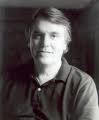
The singing was first-rate, but it was the orchestral playing that was so intriguing. For the first time, Falstaff was given with an orchestra dedicated to the kind of instruments and performing practices that the composer would have expected. This seems to have been at the initiative of the conductor, a famous Verdian, Sir Mark Elder, the band in question being the Orchestra of the Age of Enlightenment.

While they started life focused on baroque and classical music, in recent years the OAE has been exploring the Romantic repertoire, right up to the early twentieth century, with revelatory consequences. 

In this case, using gut strings instead of metal, and with narrow-bore trombones and valveless horns, the orchestra produced sounds of startling clarity. But for me the major change was the shift in balance of sound between orchestra and stage. Often the singers have to strain to be heard over a modern symphony orchestra playing fortissimo, but here they could really shine through.

A memorable evening.

Sunday, 2 October 2011

Giving thanks for the life and work of Lord Harewood


On Friday I went to the Thanksgiving Service for the life of Lord Harewood at All Saints Church, Harewood. Several of our greatest singers performed for us, including Sarah Connolly, Mark Padmore and Sir John Tomlinson. Moving tributes were paid to him by the conductor, Sir Mark Elder, and the footballer, Jack Charlton.

What an extraordinary achievement his working career was. Born into a family not noted for its devotion to the arts, he was first cousin to the Queen and a grandson of King George V and Queen Mary. As a young man he fought in the Second World War and was a prisoner-of-war at Colditz in Germany.

After the war he joined the staff of the Royal Opera House, Covent Garden, going on to direct annual music festivals in Edinburgh, Leeds, Adelaide and Buxton. Later he joined the English National Opera first as managing director and then as chairman.

His time leading the ENO was the triumphant peak of his career, and I was lucky enough to be there for many of the finest productions of that era. He brought together a brilliant and innovative artistic team, with Charles Mackerras and then Mark Elder as musical directors, and a superb company of singers.

Was he the first member of the British royal family to have a full working life, aside, that is, from joining the military or running the family business?

Friday, 26 November 2010

Maestros all?


Why are all orchestral conductors called “Maestro” these days? It seems to me that the word now comes with the territory, having previously been common practice in America.

How passé Wikipedia’s current definition reads: “A title of extreme respect given to a master musician.”

Nowadays that might more truthfully read: “Stands in front of an orchestra, usually able to read a score, waving a stick.”

I don’t mean to disrespect the really outstanding practitioners around – among them Vladimir Jurowski (above), Simon Rattle, Mark Elder and Ivan Fischer. These are the Real Thing.

But how do they feel when every Tom, Dick and Harry is apparently a Maestro?

I’d love it if we could park the word on an indefinite basis and find another. Conductor maybe?

(BTW there’s a separate issue here for the few female conductors around. Maestra in Italian means schoolmistress.)