Showing posts with label facilitation. Show all posts

Wednesday, 25 September 2013

At loggerheads in Manila


I was lead facilitator of a big Unilever workshop in Manila - and the going got tough.

Participating were 50 managers from all over South East Asia, the fastest growing region in the company at the time, and so filled with self-confidence.

The problem was that the Thais and the Indonesians were totally at loggerheads with each other about the way forward. I did what I could to bring about some kind of consensus. No joy.

Eventually my very experienced American colleague, Ned Preble, stepped forward. "Shall I see what I can do?" he asked me. "Be my guest, Ned!" I responded gratefully.

"OK, would everyone who intends to find a solution to this problem step up please," he announced. "You should know, however, that if you choose not to participate, you're agreeing to the solution. Agreed?"

So over the next 30 minutes or so, Ned facilitated a heated, chaotic-seeming scrum of competing voices around a flip-chart. Eventually, the hubbub subsided.

They had the answer.

Wednesday, 11 September 2013

The Power of Paraphrase


Over the years I have had the pleasure of partnering with (and learning from) some wonderful facilitators. And, amongst them all, a few particular moments remain in the memory.

One such was in Amsterdam. I was working with my colleague Emma Luten, helping one of the top ad agencies there, JWT, to create a new vision and strategy.

From quite early on, it was clear that the local management team was unhappy. Overwhelmingly Dutch, they clearly did not like each other, scoring points off one other at will, and resentful of working in the meeting in the international language, English.

So, after about twenty minutes, one of them told Emma to put away the marker pen, to sit down and be quiet.

“We need to talk to each other,” he said. “In Dutch.”

They went at it, hammer and tongs, many speaking at once, voices raised in anger and frustration, nobody listening to anyone else. Emma and I sat silently.

After half an hour or so, they paused to draw breath. Emma said: “Do you mind if I say something?”

“What?”

“Well, it seems to me that there are three main issues here.”

“And they would be...?”

Emma calmly laid them out before them. The team was stunned and reluctantly agreed.

“My suggestion would be that we use these issues as task headlines and work together on each of them in the remainder of this meeting,” said Emma.

So that’s what we did.

Monday, 13 August 2012

Brainstorming for breakthrough


One of the reasons that people feel that brainstorming doesn’t deliver is that, so often, when it comes to selecting which ideas to progress to the problem-solving stage, it’s the ones that seem most doable that get selected, rather than the ones that offer the potential to be breakthroughs.

It’s so natural to vote for ones you can see being implemented. But it’s the ones that have the tingle factor – if I knew how to do that, it would be amazing – these are the ones to go for.

So when I’m facilitating a brainstorming workshop, I spend a good deal of time and effort at the selection stage coaching the participants (and in particular their leader), so that they have the best possible chance of going for ideas that really intrigue them.

That’s how to get breakthroughs from brainstorms.

Saturday, 30 June 2012

Which language is most useful in multinational meetings?


A bright young Frenchman, Dominique de Jarnac, came to work with me in London. Things went well, then one day he told me that he was disappointed.

“You never correct my English,” he told me. “How will I ever improve?”

“But your English is good,” I replied. “It’s very charming when you make ‘mistakes’ – and we understand you perfectly.”

“If we were in Paris, we would correct your French constantly,” he told me.

It’s clear that the French hold tightly to the idea that there is one ‘correct’ French and that everything else is ‘incorrect’. Whereas in England we seem to know intuitively that there are dozens of versions of English, each with their own validity – Southern English English, Northern, Scots, Irish, Welsh, American, Australasian, Indian, West Indian.

All these, of course. But also Singaporean and Malaysian, Philippine, German, Italian, Dutch, Spanish, Portuguese, Japanese… and French English.

So if one is facilitating or chairing a multicultural meeting, the most useful common language is… second-language English. Worth learning to speak it fluently if English is your first language. It’s different.

Wednesday, 17 November 2010

Facilitating Britain’s Got Talent

I ran a day’s facilitation skills class on Monday with a group of seriously talented young people from the innovation agency, Happen.

Early in the session, they made nominations for best and worst from the public arena – and Simon Cowell came top of both polls.

Surprising? I guess not. In many ways Cowell is a superb facilitator. He can relate closely to the other judges, to the artists and to the audiences, responding immediately to enthusiasm and the lack of it, and particularly to changes of mood.

On the other hand, he can be judgemental before giving contestants a chance to show what they can do, and cruel in his dealings with vulnerable people.

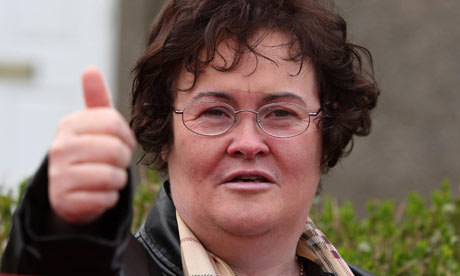
One only has to think of his chain of responses to the Scottish singer, Susan Boyle, First there was the dismissive, even contemptuous roll of the eyes as she walked on, then the amazement that she could actually sing, then the recognition that the audience loved her. Later he was to eat humble pie.

But has he really learned anything from the experience in terms of facilitating situations more equitably?

Perhaps he doesn’t want to. After all, those graphic emotions from him pull in the viewers. It’s just that Susan couldn’t handle it, retreating afterwards to The Priory (at Cowell’s suggestion, I believe), which she hated even more.

Saturday, 29 May 2010

Credit where credit is due?

Years ago I went to see a client at Unilever in New York whom I’d worked with previously in Australia. At the time he was being fĂȘted as Mr Innovation in the company worldwide, having presided over the tremendous success of a new soap brand. His opinions were sought continuously on how it should be done, on the terrific culture he’d built, on every aspect of his innovation skills.

We chatted for a while about the brand and then I said: “You know, we were pretty happy about the role we played.”

“Really? he said. “I never heard about that. Surely not.”

“Well, yes,” I said, “we facilitated the workshop when the basic brand idea was created.”

“No! I can’t believe it. I would have been told.”

“Well, I brought along the minutes from the meeting. Here – take a look.”

By this time there’s no doubt he was somewhat embarrassed.

How could this disconnect have happened?

Quite simply, he was the third team leader on the project. There had been one at the inception. That’s when we had been involved. Then one who managed the development of all aspects of the mix into test market. Then, finally, my friend, who had brilliantly led the rollout coast-to-coast.

And, in the handovers, no mention had been made of our part in it.

Is good creative facilitation so unimportant, so forgettable? Maybe it is. But, without it, would the brand ever have been created?

Sunday, 18 April 2010

Misunderstanding Mehrabian


All over the internet are references to Albert Mehrabian’s most famous “discovery”, the so-called 7%-38%-55% rule.

Supposedly only 7% of communication springs from what is said, the verbal, 38% from the tone of voice, and 55% from the non-verbal – facial and body language.

But this is to miss the point completely. In situations where words, tones and non-verbals are consistent with each other, it’s clearly the words that carry the message.

It’s where there are mixed messages, where words, tones and non-verbals are incongruent, seeming to contradict each other, that non-verbals are most likely to be believed.

So for example if I say to you that I trust you, but my facial and/or body language suggest otherwise, it will be lack of trust that is the received message.

Making sure that all channels are aligned is not so easy – it trips up politicians all the time – and while we may not be conscious of what has happened when they are not, our unconscious registers the real messages loud and clear.

So often, when I facilitate innovation meetings, the lead client puts on the table one task, where the rest of the group has a completely different issue in mind. The complexity of reading bodies, faces, tones and words in situations like this can be daunting. And without a great deal of experience, young facilitators (and old) can come unstuck.

The question is: how to become skilled at reading all these signals and responding appropriately?

Sunday, 22 November 2009

Oprah, Queen of Facilitators


So Oprah Winfrey is to give up her TV show after a couple of decades.

When I started out on the journey of learning to become a facilitator of creativity and innovation, aside from the excellent training I was given by Jasmine Dale, I also sat in with any and all other facilitators who would have me, making notes - really detailed notes - on how they did it, what worked and what didn’t.

Doing this with my colleague, Bill Boggs, was extraordinarily important to my own development. At his best he was unbeatable. Irrespective of the numbers in the room he seemed continuously to know what everyone was thinking and feeling. And to know what needed to be done in order to get towards a result.

But, in parallel, I looked at all the TV “facilitators”. Many of them seemed to me to be almost completely incompetent – and by the way I learned much from this.

Two emerged as head and shoulders above the rest – Jerry Springer and Oprah. I studied both carefully, making sure that I focused on them, not on the topic at hand. My colleagues were uniformly dismayed that I should pay such attention to Jerry. After all, wasn’t he serving the forces of darkness? But with such skill and style.

On the other hand, Oprah in her early days was magical in her ability to draw out her guests, often working with a large studio audience as well as with the celebs. All were treated with dignity and empathy. Her connection-making skills were particularly evident. She always knew when to move in, when to back off, when to paraphrase to help clarity, when to confront…

Of course, I was studying these people twenty years ago. By now both Jerry and Oprah have become the true stars of their shows, irrespective of the exalted standing of guests, and that has made them, from my point of view, infinitely less interesting. But I owe them a lot.

Are you a facilitator? Do you have your own role models?