Showing posts with label Jorge Luis Borges. Show all posts

Thursday, 30 January 2014

In search of enlightened dictators


Australian friends, many of them, seem utterly horrified by their recently elected Prime Minister, Tony Abbott. So much so that various forms of civil disobedience are canvassed.

It seems to me that whenever this sort of situation occurs, a yearning for another form of government bubbles to the surface – usually the desire for some kind of benevolent dictatorship, which will sort things out with justice and “common sense”.

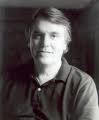
Thinking like this must have driven the Argentinian writer, Jorge Luis Borges to support two generals ‒ Videla in Argentina and Pinochet in Chile. Of course, we know now that, whatever their initial intentions, both men turned decisively to tyranny and repression in defence of their power. It was several years before Borges understood the reality of his mistake.  

Have there ever been enlightened dictators who stuck to benevolent principles throughout their rule? I doubt it. Perhaps the closest to that ideal was Lee Kwan Yew (who was consistently re-elected and thus never threatened) in Singapore.

But the stream of hope turned to torture is seemingly unavoidable.

Let’s see whether the Egyptian people can find a satisfactory way through their current difficulties. As for the Syrians…

Sunday, 26 December 2010

The Garden of Forking Paths

Over Christmas Day I read again “The Garden of Forking Paths”, a short story by the Argentinean writer and philosopher, Jorge Luis Borges.

Only ten pages long, it is densely complex in meaning, but the garden at the heart of the story stands as a metaphor for creative decision-making.

The central character describes his struggle to unravel the meaning of his great-grandfather Ts’ui Pên’s twin projects – a novel and a labyrinth - both apparently unfinished at his death:

“Almost instantly, I understood: ‘the garden of forking paths’ [ie the labyrinth] was the chaotic novel; the phrase ‘the various futures (not at all)’ suggested to me the forking in time, not in space… In all fictional works, each time a man is confronted with several alternatives, he chooses one and eliminates the others; in the fiction of Ts’ui Pên, he chooses – simultaneously – all of them. He creates, in this way, diverse futures, diverse times which themselves also proliferate and fork… In the work of Ts’ui Pên, all possible outcomes occur; each one is the point of departure for other forkings”

I believe this passage describes the constant dilemma faced not only by writers and gardeners, but also by artists, composers, inventors, scientists, innovators – in fact all who see themselves as living the creative life. Every creative decision, Borges suggests, has many possible ways forward, perhaps an infinite number, several of them potentially fruitful. The issue for most of us (though not for Ts’ui Pên) is to make choices, often working, in truth, in a mist.

This is not a proposition guaranteed to delight the hearts of publishers, academic supervisors, or leaders of teams and organisations, who necessarily seek clarity and reasonable certainty.

How do you deal with these creative forks?

Wednesday, 9 December 2009

In Praise of Lists


The Italian writer, Umberto Eco, has curated an exhibition for the Louvre in Paris of lists. Of lists? “The list is the origin of culture,” says Eco, citing Homer, Thomas Mann and James Joyce’s Ulysses.

A personal favourite of mine are the lists in the extraordinary travel books of Patrick Leigh-Fermor. The Argentinean poet and essayist, Jorge Luis Borges, lists his special pleasures as: “Hourglasses, maps, eighteenth century typography, etymologies, the taste of coffee and Stevenson’s prose.” In Shakespeare’s Henry V, the king lists the names of the French and English dead, ending with plain Davy Gam, Esquire. Early in the Bible we encounter the Ten Commandments, and later the Beatitudes. Buying a CD or book or DVD, we get the help of Google to present us with a list of options.

And lists are at the core of effective work, as we sort out the important and the urgent each day from amongst the dozens of jobs competing for our attention. This is especially important in innovation projects, where things can inadvertently come off the rails at any moment.

But there is always a struggle - every day, every hour - between the important and the urgent, where the latter seems so often to drive out the former.

How do you deal with this problem?