Showing posts with label Uppingham. Show all posts

Tuesday, 16 September 2014

Conversing in the car


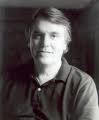
I took my now-retired English teacher from school at Uppingham, Gordon Braddy, on a day trip to the Barber Institute of Fine Arts at Birmingham University.
 
We saw so many fine works there Botticelli, Veronese, van Dyck, Rubens, Poussin, Dahl (above*), Murillo, Gainsborough, Turner, Rossetti, Pissarro, Manet, Degas, Monet, van Gogh, Rodin, Gauguin, Derain, Magritte, Hodgkin… His first time there.

The journey was some two hours by car in each direction (including me losing my way in both directions, somewhere around Spaghetti Junction). We talked intimately and continuously.

At one point, Gordon remarked how good such journeys are in promoting rich conversation… ‘much better than trains.’

I suppose the fact that driver and passenger sit so close to one another, but necessarily without eye contact, has a lot to do with that.  

*Johan Christian Dahl (1785-1857, Norwegian), ‘Mother and Child by the Sea’

Sunday, 11 May 2014

A Talent for Happiness


My inspiring English teacher at Uppingham half a century ago, Gordon Braddy, has just published a book of his own short stories, written over the past five years. Although clearly fiction, each taps into aspects of his own life, rich with his particular voice.  

I was struck in the last of them, the powerful ‘Visions and Revisions’, by an observation made by a headmaster to a young teacher in a job interview: ‘I do hope you have a talent for happiness… Oh yes! It has been my experience that even the most gifted schoolmasters only achieve the really important things when they are happy.’

A talent for happiness. Such a simple concept. So elusive.

My sense is that it’s important in many walks of life.

Monday, 17 September 2012

Centenary of a great musician and teacher


Walking up Marylebone High Street, I stopped to look in the window of Oxfam to see which pre-loved books were on display in the window. And there was a fine, only slightly foxed, early hardback copy of Woodwind Instruments and their History by Anthony Baines. So I bought it.

Tony Baines was one of those (very few) teachers at school who lit my fuse. I don’t think, when he was endeavouring to impart to me better ways to play the trumpet, that I had any idea of the scale of his musical scholarship or the esteem in which he was held by his contemporaries. Basically he was a bassoonist but, as I was informed by an awed colleague, he could play (and teach) every wind instrument from every era.

And he had boundless enthusiasm and ability to communicate. I was so lucky.

After Westminster School and Christ Church, Oxford, in 1933 he became a scholar at the Royal College of Music in London. While he was still a student, he came to the notice of Sir Thomas Beecham, who invited him to join his fledgling London Philharmonic Orchestra as a bassoonist.

He had a very active Second World War, was wounded and captured in the desert (escaping twice). In one of the prisoner-of-war camps he arranged (and conducted) from memory Beethoven’s Eroica Symphony. After the war, he worked with a ballet company, before turning to teaching (at Uppingham then at Dean Close) and writing.

His great collection of wind instruments form an important part of the Bate Collection at Oxford University and he was the first curator of that archive from 1970.

He died in 1997, but this year is the centenary of his birth.