
There are lots of quotations that swim around web, endlessly repeated, often incorrectly attributed, frequently without source of any kind and usually growing textual amendments to suit the new context. One such is this:
The only art is to omit.
It has been used most recently (and negatively) by a reviewer of Eleanor Catton's lengthy Man Booker Prize-winning novel, The Luminaries.
To be fair, it is nearly always given as by Robert Louis Stevenson, which is right. But where on earth is it from? I couldn't locate it, so eventually I asked my friend Roger Swearingen in California. He's one of, if not the leading RLS expert in the world. He, of course, knew immediately. "RLS to his cousin Bob, ?30 June 1883," he emailed, appending the plaintive personal note: "I only wish I could learn that art."
And so say all of us.
The correct version of the aphorism comes at the end of a paragraph in the letter, in which RLS, the great stylist, deals with the inadequacies of Balzac as a writer:
He was a man who never found his method. An inarticulate Shakespeare, smothered under forcible-feeble detail. It is astounding, to the riper mind, how bad he is, how feeble, how untrue, how tedious; and, of course, when he surrendered to his temperament, how good and powerful. And yet never plain nor clear. He could not consent to be dull, and thus became so. He would leave nothing undeveloped, and thus drowned out of sight of land amid the multitude of crying and incongruous details. Jesus, there is but one art: to omit! O if I knew how to omit, I would ask no other knowledge.
Cousin Bob, by the way, was the pioneering (and still valuable) art critic, RAM Stevenson, author of a seminal book on Velasquez.
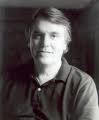
Above: RLS photographed by H Walter Barnett in Sydney, 1893



 Posts
Posts

