Showing posts with label Nobel prize. Show all posts

Monday, 12 March 2012

Making predictions


By definition, in innovation we are dealing with the future. And we know that the future is always a foreign country – they will do things differently there.

The problem, of course is in prediction. And that problem is compounded by the degree of attention that we pay to our leaders at any given time.

Take Davos. The great and the good regularly assemble there in order to pontificate. In 1997 the world’s political and economic elect designated Southeast Asia as the most dynamic region. This was shortly ahead of meltdown, the Asian financial crisis, when Thailand, hardest hit, effectively became bankrupt.

Then in 2008 Davos totally failed to predict the forthcoming global banking crisis, initiated by Bear Stearns and Lehmann Brothers.

Almost laughable was the 1991 prediction of Lord Rees-Mogg, one of Britain’s most respected pundits, who foresaw “a decade of escalating economic and political disorder unparalleled since the 1930s.” Right outcome (broadly). Wrong decade.

Robert Millikan, awarded the Nobel Prize in Physics in 1923, declared: “There is no likelihood that man can ever tap the power of the atom.”

The problem arises fundamentally from hubris. I get a senior governmental or academic position and start to believe that I know what the future holds.

It was George Santayana who said that those who cannot remember the past are condemned to repeat it.

Perhaps more useful are the words of Yogi Berra: “It's tough to make predictions, especially about the future.”

Friday, 14 October 2011

The Tale of the Unknown Island


I was working in Porto and was surprised that the participants in my Innovation Masterclass, all Portuguese, were so convinced that they and their compatriots were not really innovative. I reminded them of the proud Portuguese history of discovery, but they were not convinced.

Perhaps they had not read the short story by their own novelist, José Saramago, “The Story of the Unknown Island”. It opens: "A man went to knock at the king's door and said, Give me a boat..."

Saramago won the Nobel Prize for Literature in 1998.

The story is in the form of a fable and covers so many of the critical issues in creativity and innovation in a hierarchical society – powerful bosses, having clarity of vision or destination, managing doubts, the value of persistence, and courage, paying attention to one’s dreams, breaking away from current wisdom, finding partners with complementary attitudes and skills, realising that we already have the answer within. And much else besides.

I picked it up at the suggestion of my friend, the composer and trombone-maestro, Simon Wills.

Do read it! And let me know what it says to you.

http://www.amazon.com/Tale-Island-Jose-Saramago/dp/0151005958

Sunday, 21 August 2011

Discovering new oceans


It’s sad, when something profound has been written, to find it consistently attributed to the wrong person, or even to Anon.

What’s more, I’ve done this myself. When I put together the Imagine book for Synectics, I had no idea where the following quote came from. I just knew it was important. So I attributed it to the aforesaid Mr Anon. Here it is:

“One cannot discover new oceans without consenting, for a long time, to lose sight of the shore.”

I certainly was not alone. And even in the age of the World Wide Web, it’s still said to be by that prolific unknown author, or, sometimes, extraordinarily, by Christopher Columbus.

Well, in fact it’s from Les faux-monnayeurs [The Counterfeiters], a novel by the French writer and Nobel Prizewinner, André Gide, published in 1925.

And what a vivid metaphor it is. Fundamental to success in the creative process.

(The portrait of Gide, above, is a detail from “The reading by Emile Verhaeren” by Théo van Rysselberghe.)

Friday, 17 June 2011

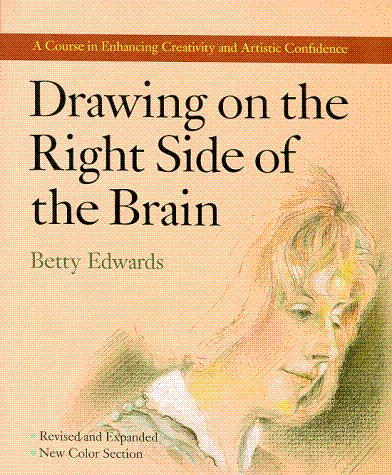
Left brain/right brain: the hidden truth


We all know nowadays about what the left brain does and what the right brain does. Yes?

The theory was first put forward by neuro-psychologist Roger Wolcott Sperry. He won the Nobel Prize for Medicine in 1981, having developed his thinking from the research he had done in epilepsy patients. Basically he concluded that each side of the brain, each hemisphere, is conscious in its own right, and that the left side deals primarily with language, logic, numbers and so on, and the right side deals with the expression of emotions, music, intuition etc.

The creativity and innovation industry rapidly swung into action, co-opting the right brain as its own proprietary territory, and creating new theory and practice, built upon new theory and practice… All of it a bit shaky was my impression.

Now here is the hidden truth: more recent research conducted by the American Psychological Society concludes that, in reality, our abilities in most fields are at their best when both hemispheres are working together.

Well, waddaya know.

Wednesday, 11 May 2011

Creativity and Ageing


Over several years, I have done innovation work with top scientists on healthy ageing. Rather overwhelmed with all the info thrown at us, I asked one, an American professor, for the essence of it all. “Eat more fruit and vegetables and take more exercise,” he said.

That's it, apparently.

A lady in her 80s followed up by asking: “If I choose between doing the Times crossword and taking a walk, which is better for me?” He responded: "Get out the door. Every time."

Now a new book* by Barbara Strauch, based on a number of recent studies, goes further. She reveals that as we grow older the brain improves in several ways, becoming better equipped to deal with the important issues and better able to use more of the brain’s power to solve problems.

This is radical stuff in a world that has assumed up to now that creativity is the birthright of the young.

Hope for us all.

*Barbara Strauch, The Secret Life of the Grown-Up Brain: Discover the Surprising Talents of the Middle-Aged Mind, Penguin £9.99