Tuesday, 30 July 2013

Sport as metaphor for life


In a provocative piece in Melbourne’s The Age, the columnist Tim Soutphommasane asserts that Australia’s current malaise on the cricket field “may also say something about the state of the nation… cricket as a metaphor for life.”

Has he not noticed that, while Europe and North America have struggled to get any semblance of forward motion, the economy in Australia has remained in robust health?

I'm always leary about sport/society metaphors. When I lived in Sydney in the early 1980s, Australia went crazy about their "historic" winning of the ultimate prize in sailing, the America's Cup. However, the strong feeling of euphoria accompanied a deep national slide into recession...

And the man behind the achievement, entrepreneur Alan Bond, was eventually sent to prison for fraud.

Now how do you decode all that, metaphorically?

Saturday, 27 July 2013

Portrait of the artist as a young musician


In my mind Sir Peter Lely has always been one of those seventeenth century portrait artists who painted society sitters by the shedload, all pretty much interchangeable, and without any real sense of insight or distinctiveness.

That is, until we went to the recent show of his work at the Courtauld in London. These were voluptuous works, bursting with exuberant sensuality. Quite a shock.

And among them was this extraordinary group portrait, The Concert. At its heart is the man playing the violone – a precursor of the double bass. This is expertly depicted, as though the artist is himself a performer on the instrument. Is this a self-portrait?

Then there’s the flautist, depicted in a more generalised way, and the various onlookers. But who are they? And how do they relate to the musicians? It’s a mystery.

If you’d like to see it now, this magical painting from the Courtauld’s own collection, it is on loan to the Barber Institute of Fine Arts at the University of Birmingham. Worth the trip.

Wednesday, 24 July 2013

Totes irritating…


An American boss, transferred to London in the 1980s, complained to me that he couldn’t bear the standard British response of agreement he heard all day, the drawled: “Ab-sol-ute-ly.”

If he came back today, he’d be more likely to hear the word that’s rapidly replacing it, come in from the USA, of course: “Totally.”

Or the more succinct “Totes.”

Not sure they are any less irritating. 

Sunday, 21 July 2013

The age of isms


The last century or so seems to have been utterly dominated by isms.

Marxism, Nazism, socialism, conservatism, monetarism, capitalism, nationalism, secularism, modernism, expressionism, symbolism…

In practice, while each purports to be a useful way of seeing the world, they each become elephant traps, where beliefs turn into straitjackets, blocking the intrusion of fresh thinking.

When I played with the Idle Hands at the Witches Cauldron in the 1960s, I got to know the sage of the clientele. He was older than me – mid-20s perhaps. I asked him: “What’s at the source of your beliefs.”

“I’m a nihilist,” he proudly announced.

I wonder whether he ever escaped?

Thursday, 18 July 2013

Next to Bad Boy at Shakespeare’s Globe


Walking in the sun along the South Bank of the Thames yesterday, I dropped into Shakespeare’s Globe.

I’m right next to the Bad Boy Pulled Pork stall. That’s the flagstone with my name on it. Nearby are Ben Kingsley, Paul Eddington, a “William Shakespeare” and “Japan”.

Back in the early 1990s, when I was World President of the International Advertising Association (and a director of the Globe), I was able to persuade lots of media owners around the world to donate space so that we could advertise the personalised flagstones for sale.

If I remember correctly, they were £500 a pop, and we were able to raise many tens of thousands towards the building of the theatre.

Have you been yet? It’s a very special experience. And tickets for groundlings (best place in the house) are still just £5.   

Monday, 15 July 2013

Facing forward on aircraft...


Following the injuries (and deaths) caused by the Asiana plane crash in San Francisco, an aviation expert has announced that rear-facing passenger seats would be safer on aircraft. Yet every airline has known this for years, even decades.

What they also know is that passengers prefer to sit facing forwards. This was one of the issues confronting British Airways when they introduced the herring-bone flat-bed configuration in Club World, where half the seats face towards the rear. In the end they decided to try it out on the North Atlantic routes – with tremendous success and customer acceptance.

So why is it that every major airline in the world still makes us face forwards, restrained only by a belt across the lap, when we could all be flying, much more safely, on seats anchored to the floor, fully supporting us in the event of problems?

Time for a radical re-think. 

Friday, 12 July 2013

The Shakespeare of Innovation


In the current wholesale revision of the curriculum for primary and secondary schools in England, I don’t see any mention of Thomas Edison. Really he should be at the centre of education for our children, the Shakespeare of technological innovation, embodying as he does:

Breakthrough ideas
Envisioning the future
Systematic creative problem-solving
Sticking at it through thick and thin
Making it happen
Working in project teams
Providing inspirational leadership
Marketing himself and his work
Protecting intellectual property
Raising capital
Selling to key customers
Managing success and learning from failure

Many of these aspects were pioneered by Edison himself.

This is a piece I wrote on him a while back. In so many ways he was, as I wrote, the father of innovation management:

Tuesday, 9 July 2013

What are Russians really like?


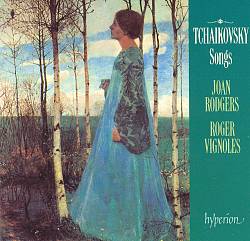
Perhaps a good place to start in understanding the particular characteristics of Russians would be to notice the titles of their songs. Here are thirteen of them, taken entirely from Tchaikovsky:

Both painfully and sweetly
A tear trembles
None but the lonely heart
As over the burning ashes
As they kept on saying, “Fool”
No answer, or word, or greeting
The love of a dead man
Was I not a little blade of grass?
I’ll tell you nothing
I did not love you at first
Disenchantment
Mid sombre days
Again, as before, alone

Quite different from German, French, Italian, Spanish, English, American song titles…